
By Becky Chapin, Archivist
In 19th century Geneva, Black men and women participated in events such as the Emancipation Celebrations (1840-1892), Ontario Debating Club, and the St. Phillip’s Mission choir performing in concert halls as a way to come together as a community. These events are discussed more formally in Kathryn Grover’s Make a Way Somehow that also establishes a clear decline in similar events and organizations in the early 20th century. However, this changes as the Sampson Naval and Air Force Bases are established in the 1940s and 1950s and the number of Black residents rises.
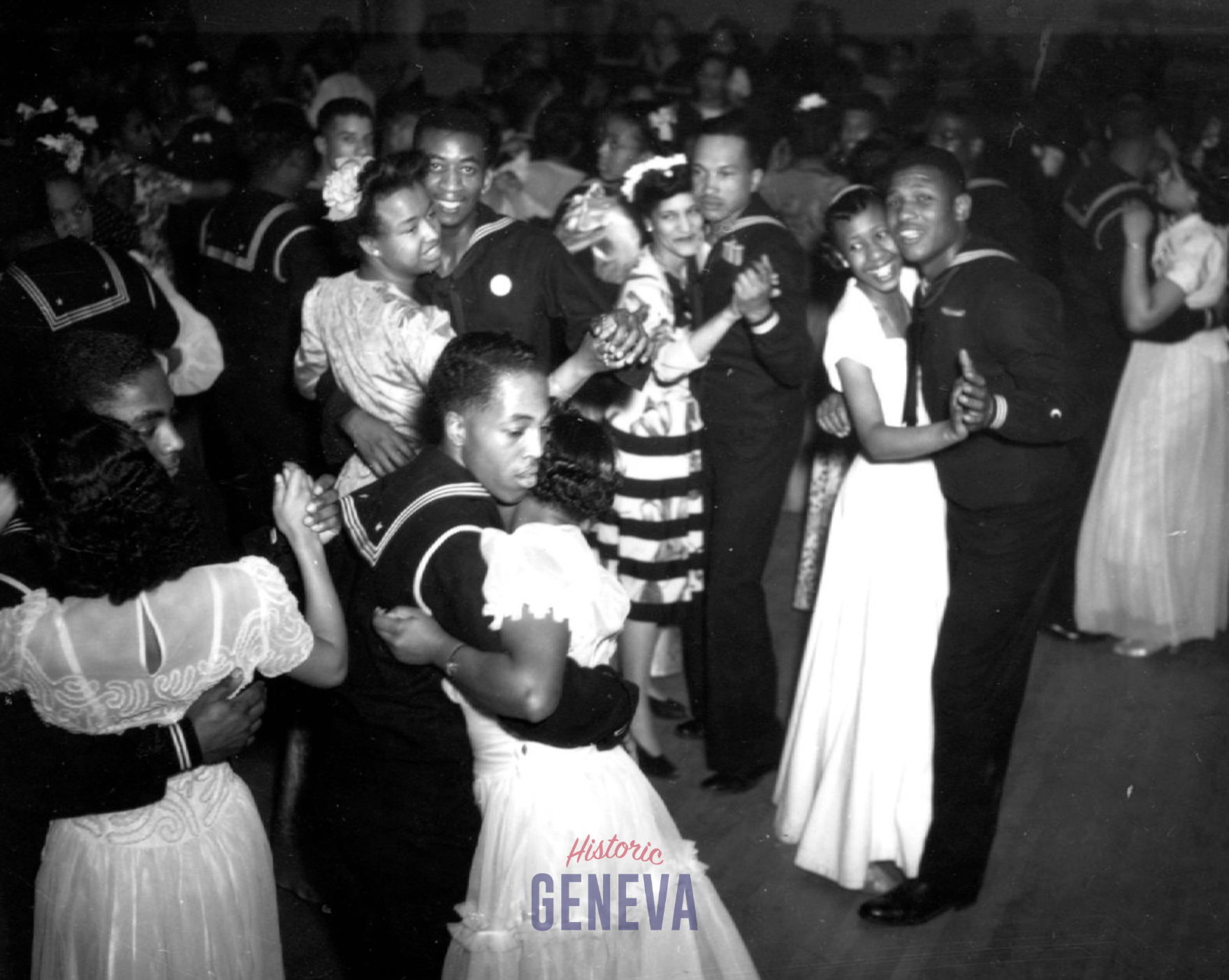
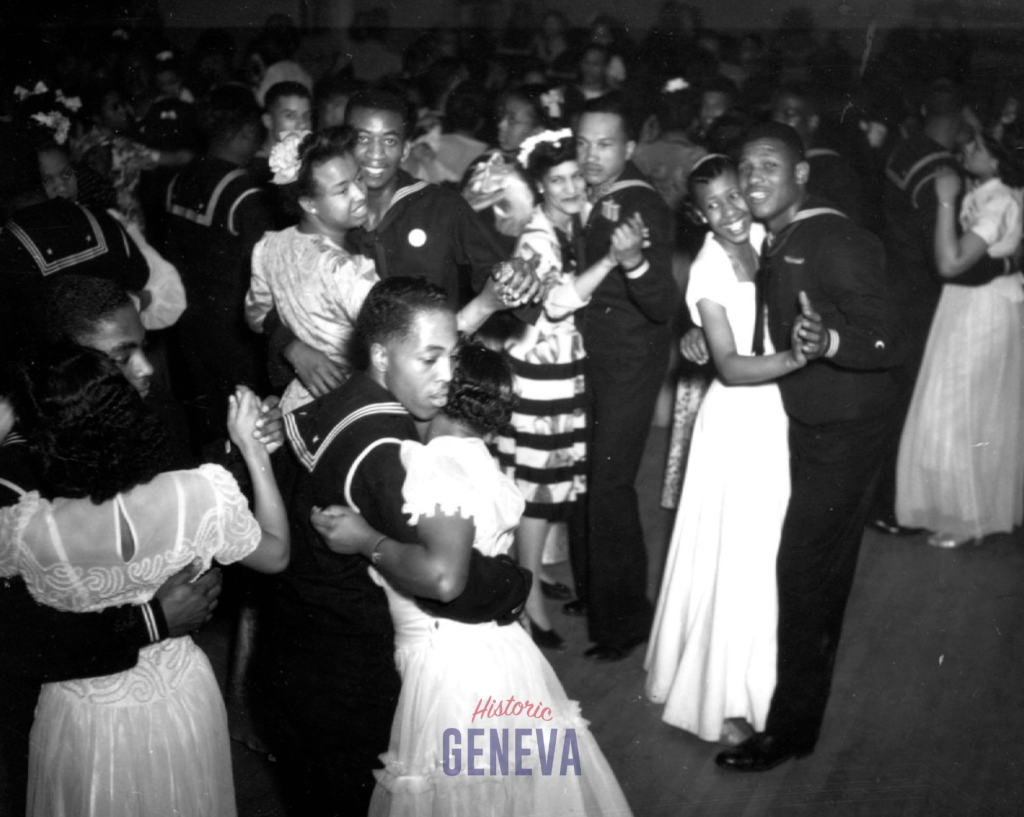
During World War II, a separate branch of the USO was formed to support Black servicemen in the segregated military and Geneva was no different. There was a brief suspension of the USO for all servicemen from 1947 until 1950 when the Korean War reinvigorated the organization.
Locally, the Geneva Social Club was organized by Black and African American women in 1951 as a way to help Black personnel at Sampson Air Force Base in cooperation with the local USO chapter. Mildred Mathis, its originator and first president, recognized the need to support the nearly 2,000 Black airmen who would be stationed at Sampson. The Social Club partnered with the Traveler’s Aid Society and helped out at the base hospital. The group would provide hostesses for USO dances, partnered with other organizations for dinners, and members would invite airmen to their homes for holidays.
After the closure of the Air Force Base, the Geneva Social Club remained active and devoted to civic and social activities. It hosted fashion shows, dances, picnics, and raffles to support sick and needy people and to provide assistance to college bound Black students. It fundraised to donate to civic projects like the Geneva Community Chest, American Cancer Society, and the Heart Fund into the 1970s.
The Social Club eventually started the Martin Luther King Fund in 1968 which would provide a sum of money to one black boy and one white boy each year who “best exemplify the qualities that Dr. King stood for.” This scholarship predates the current one awarded by the Martin Luther King Committee which began its scholarship awards in 1990.
In 1954, the Geneva Men’s Club was organized by a group of Black men who desired “to help promote the general progress of the community and bring about a better understanding and relations between all citizens.” The Club only lasted about five or six years, but it hosted picnics for families, back to school events, and raised enough money to send a few local Black children to Boy and Girl Scout camps.
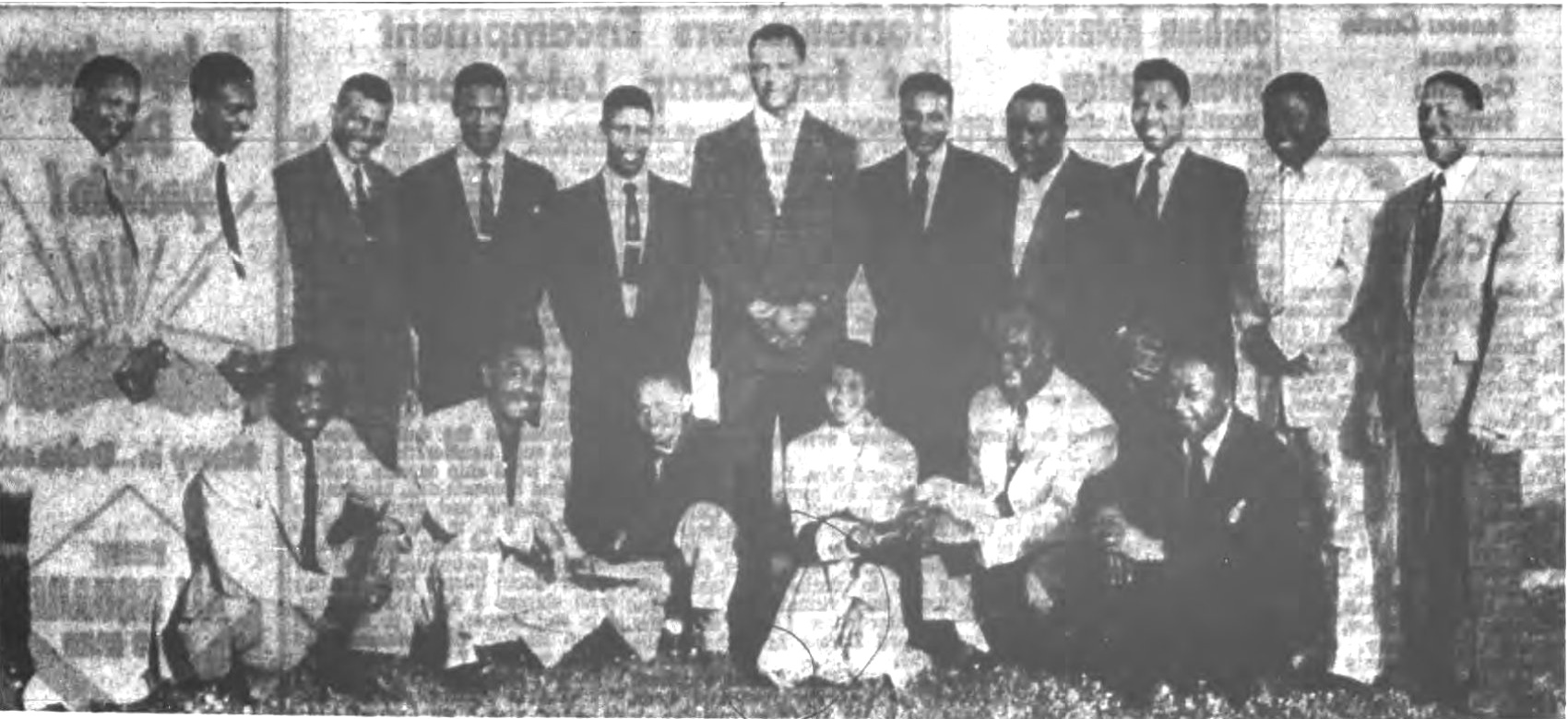
President of the Men’s Club, Charles Kenney expressed his reasons behind forming the club to Kathryn Grover, stating “we decided this community needed something that was going to do not only us older guys some good, but the kids coming up. See if we couldn’t do something here to ease tensions in the community and do something worthwhile for those that would follow us.” He also felt the club would act as a way for the old and new Black families of Geneva to come together and support each other.
Because of his involvement with the club, Kenney also served on the Mayor’s Council for a Better Geneva group in the 1950s which was organized chiefly to address the housing crisis in Geneva. Kenney was quoted frequently in the newspaper during this time as the group tried to address substandard housing, especially among the minority groups of Geneva.
The goal of helping others would continue with the formation of the Half-Moon Social Club in 1967. Founded by Nellie and Clarence Day with four other Black couples, the sole aim of the club was to help all needy people in the Geneva area. Although it was first formed to help children with disabilities, with contributions to Happiness House, it expanded its charitable activities within months of organizing.
Though the members first used their own money to host a dance to raise money for the club, they were eventually able to establish a fund to draw from as the community needed it. The Half-Moon Social Club hosted dances, chicken dinners, fish fries, and more to raise money to donate to major drives for cancer relief, Happiness House, Cerebral Palsy Association, and to provide canned goods and clothing to families in need.
Quoted in the Finger Lakes Times, Nellie said “It is important that all people realize that regardless of skin color we all have needs. We must all work together.” Nellie continued charitable work when she helped found the Geneva Center of Concern and served as its president. It was around this time, in the early 1970s, that the Half-Moon Social Club stopped appearing in the newspaper.
The two Social Clubs were called upon by other organizations that were centered in the Geneva Black community. This includes the Geneva Home Improvement Corp. which was trying to raise money for down payments in 1969 to help families move into their own homes or who were displaced.
This article was brought to you in part by our supporters. Be our partner in telling Geneva’s stories by becoming a Historic Geneva supporter.