
By John Marks, Curator
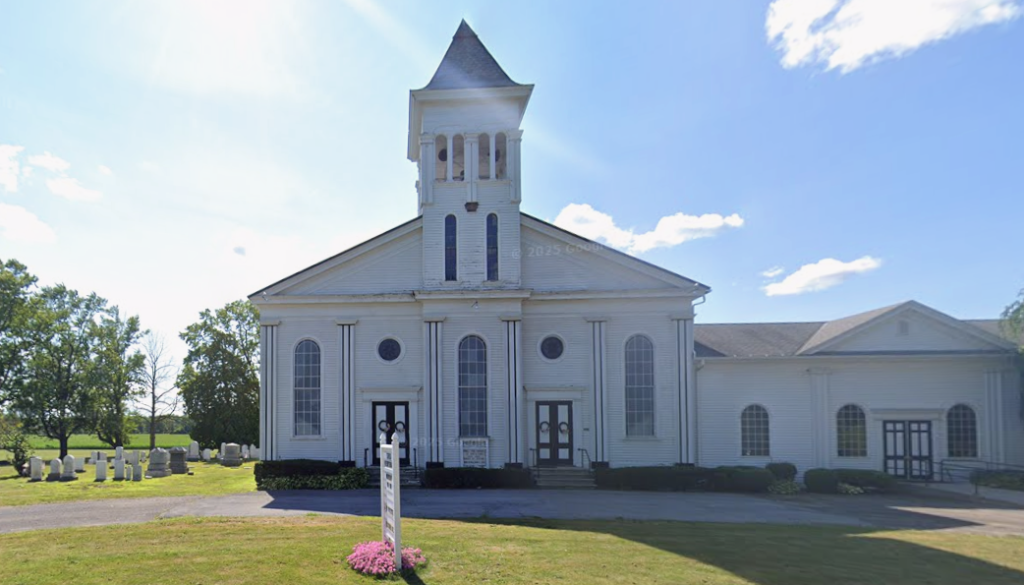
This month I gave a tour of the Old Number Nine Cemetery at the Seneca Presbyterian Church, locally known as Seneca Number Nine. In the past I’ve done the two Catholic cemeteries in Geneva, St. Patrick’s and St. Mary’s, that aren’t physically connected to a church. This tour was about the church and its neighborhood as much as the interred.
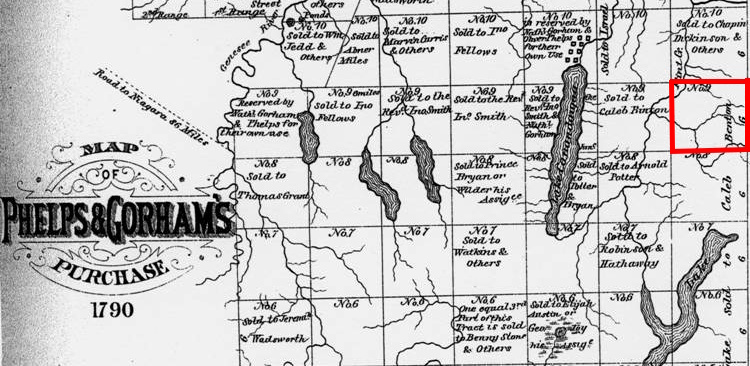
When the Phelps and Gorham Purchase was surveyed by Col. Hugh Maxwell, he laid out the land in squares, labeled as ranges and towns, beginning at the incorrect Pre-Emption Line and the NY-PA line. Ranges were numbered from east to west, and towns were numbered from south to north. Town Number 9, First Range was the square where the church was founded. The Town of Seneca was formed in 1793, taking in Number Nine and the village of Geneva.
The people who settled around Number Nine were typical of incomers to the Phelps and Gorham Purchase. New England farmers, like the Whitneys and Stanleys, came for the rich productive soil. There is Whitney Road and the Whitney Cemetery on County Road 4, and the hamlet of Stanley.
Scotch-Irish descendants from Pennsylvania included Wilkie, Rippey, Black, Wilson, Latta, and Riland. The last three have roads named for them. Incidentally, Pennsylvanians and New England Yankees also settled to the southwest on Keuka Lake. They gave the town its unique name: Penn Yan.
Around 1800 there was an influx of people from Scotland and northern England. Names included McKelvie, McMonigal, McPherson, McCandlish, McIntyre, and Campbell. Robson, Wilson, Burrell, Dixon, and Crosier were English families. The Halls and Flints established the hamlets that carry their names.
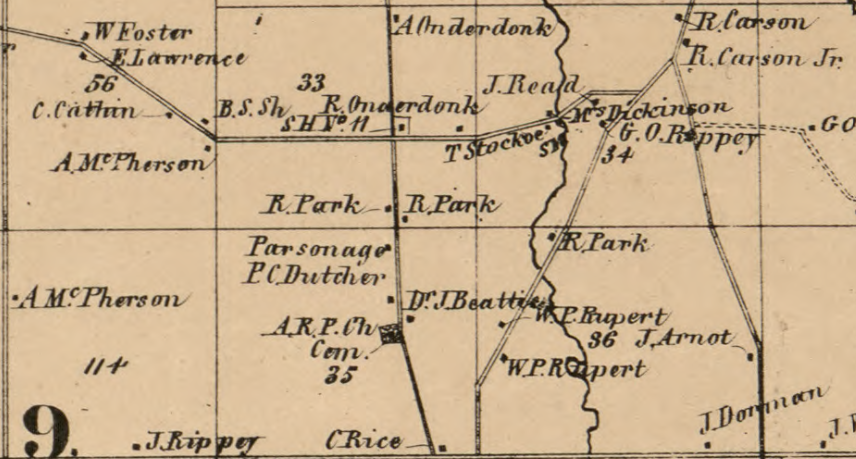
The last groups influenced the creation of the Seneca Number Nine Church. They were conservative Presbyterians in the Scottish tradition. They worshipped without musical instruments or vestments or paraphernalia. They dressed plainly and lived morally.
In the 1790s Presbyterian Rev. Jedediah Chapman from Geneva came out and preached in Number 9 and Number 10 (Oaks Corners) for three years. He was asked not to return to Number 9 because the congregation found him too modern and liberal.
In 1807 a group of Seneca inhabitants gathered at Samuel Latta’s house and formed The Associate Reformed Church. The early founders of the church were: Valentine Brother, Samuel Latta, John Rippey, Samuel McIntyre, and James Fulton. The following year the society made steps to start the construction of a meeting house which would be completed in 1810 with 42 pews. The first pastor, Reverend Andrew Wilson of Albany, was installed. In November 1812, a plot of land adjacent to the church was consecrated as a burying ground.
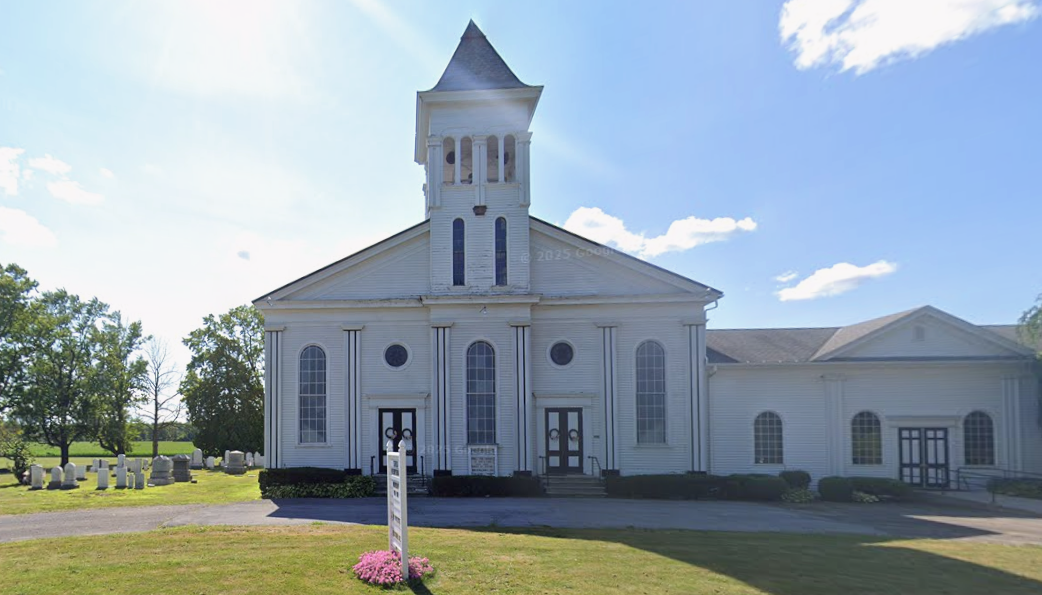
The Seneca Number 9 congregation included Genevans who held Associate Reformed beliefs. Tiring of the eight- mile trip to Seneca, in 1825 they formed the Geneva Associate Reformed Church. In 1831 they erected a building on the corner of Castle and Genesee Streets, known locally as the Scotch Church. They joined with the North Presbyterian Church in 1876.
This article was brought to you in part by our supporters. Be our partner in telling Geneva’s stories by becoming a Historic Geneva supporter.