
By Heather Green, Visitor Services and Programs Manager at Rose Hill Mansion & Johnston House
For the past few months, we have been exploring some of the rooms of Rose Hill Mansion, the history of various public and private spaces of a home, and how those rooms have changed over the years. Today, we are taking a closer look at what makes up the rooms: the walls. Or, more specifically, the wallpaper.
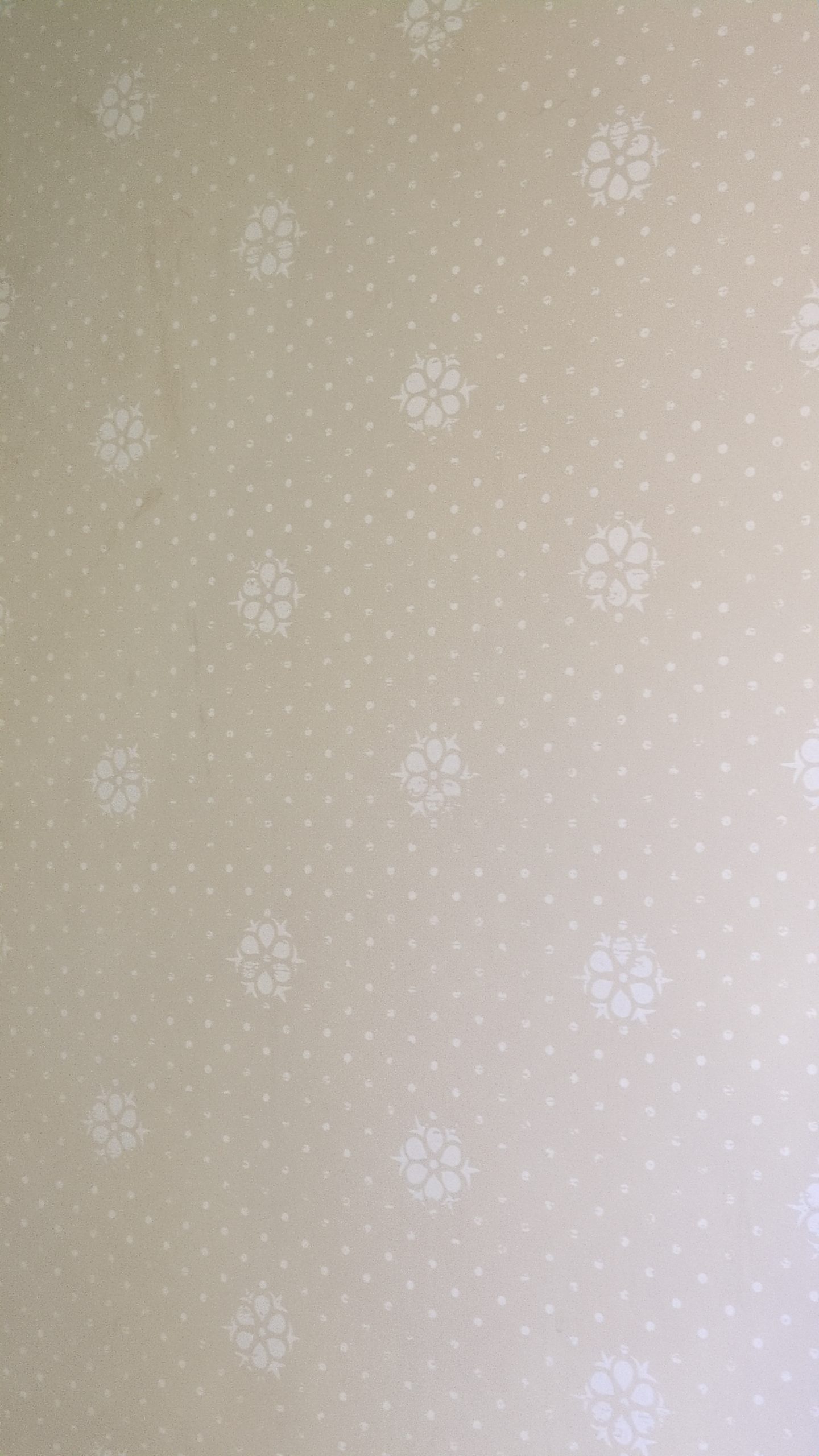
Wallpaper was a popular choice for wall coverings throughout much of the 19th century. In the 1830s, technological advancements made wallpaper an affordable choice for most people. From florals to landscapes, homeowners could personalize their walls as much as they desired – which they did. A simple search on Historic New England’s website lists well over 4,000 different samples from the 1800s alone.
When you walk through Rose Hill Mansion, you can see wallpaper in several rooms. The designs range from subtle (such as Margaret’s office on the second floor) to dramatic (the Dining Room comes to mind). Visitors often ask about the authenticity of the wallpaper: Is it original? Is it historic? Is it really what they would have used? Let’s take a dive into two wallpapers which elicit many questions.
One wallpaper that provokes comment is the bamboo wallpaper in the Breakfast Room. It tends to evoke strong feelings, either in favor of it, or quite the opposite. Most often the comment is, “Why that design?”
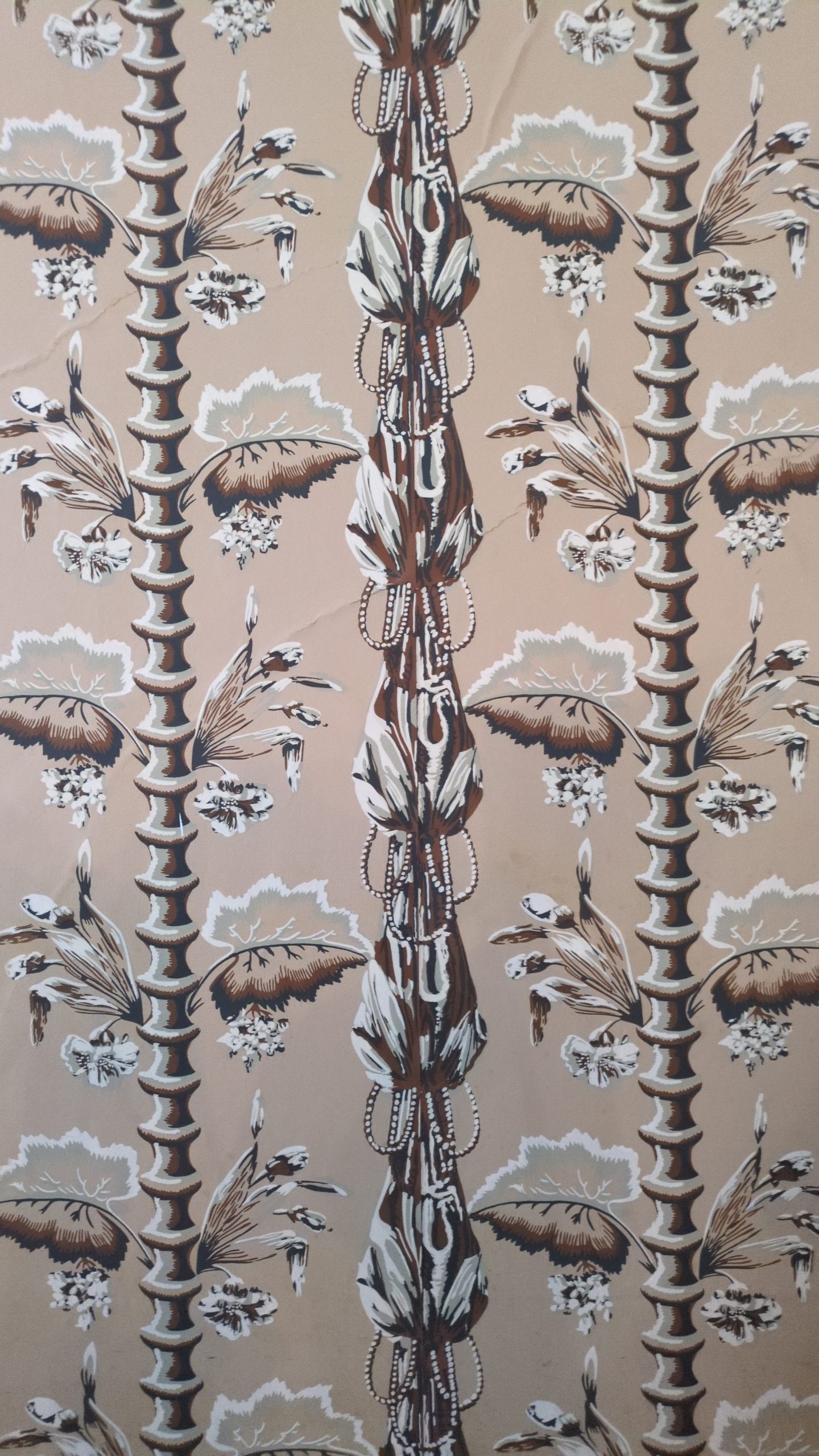
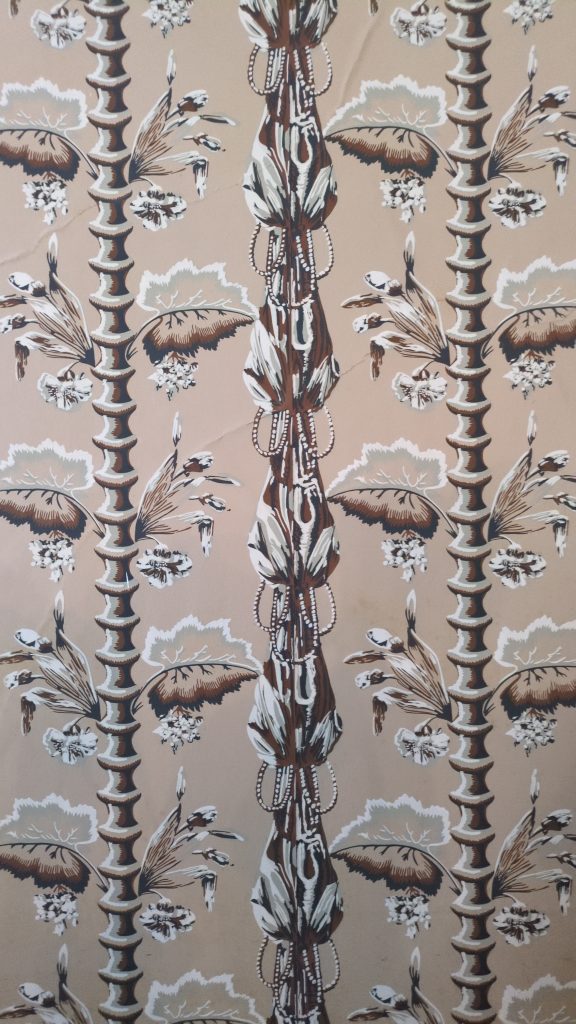
Called Bamboo and Drapery, it is a pattern that traces its history back to early 18th century manufacturer Moses Grant, Jr. Created around 1811, it combined two trending designs: a repeating pattern (easy to make with block printing) and harlequin, a mirror image style of design. The leaves along the bamboo are split in half and printed in contrasting colors for the harlequin feature.
Fragments of the same pattern have been found in several historic houses, including the Pierce/Hichborn House in Boston (part of the Paul Revere House historic site) and the Witch House in Salem, Massachusetts (originally the home of Judge Corwin, who presided at the 1692 trials of those accused of witchcraft).
In 1837, William Strong would not have chosen wallpaper based on houses that we now consider historically important. However, when the mansion was restored, it was easy to look back and see how popular the design was across the region in the early 1800s.
Also early in the 1800s, trompe l’oeil saw a rise in popularity. Translated as “trick of the eye,” trompe l’oeil is an ancient art form used to add illusion to a building or painting. In 19th century wallpaper, it could refer to any design meant to look three dimensional.
At Rose Hill, both the Dining Room and Parlor Bedroom utilize this effect. Draped folds of cloth look enticingly realistic. How many fingers over the years wanted to reach out to feel the fabric that wasn’t there?
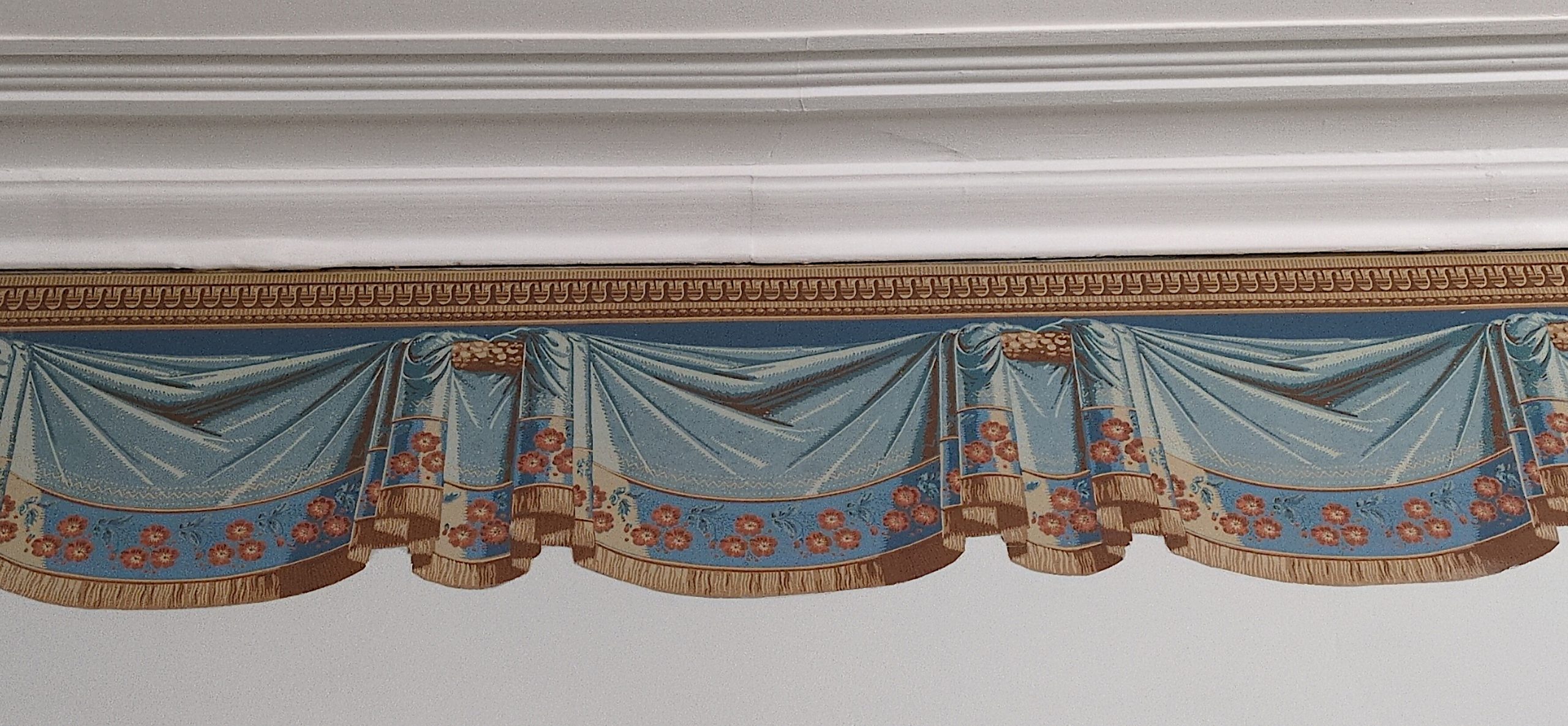
Darfour, a French company, made a wallpaper similar to the one in the Dining Room in the early 19th century. Darfour went on to make several versions of ornamented drapery wallpaper. Drapery was commonly found on wallpaper borders or incorporated into other designs. Look again at the Breakfast Room, remember that design includes drapery in its name.
Returning to the questions from earlier, none of the rooms have the original wallpaper from 200 years ago. However, knowing the styles of the time, they are reproductions of what might have been on the walls when the Strongs lived in the mansion. And, yes, many people did have similar wallpaper at the time.
With so many rooms and patterns of wallpaper, we cannot explore all of them in one post, so we will have to return to the walls at another time. There are still interesting stories to come. Stay tuned!
At Home with the Swans: Breakfast Room
At Home with the Swans: Parlors
At Home with the Swans: Necessary Room
At Home with the Swans: The Kitchen
At Home with the Swans: Internal Communication
This article was brought to you in part by our supporters. Be our partner in telling Geneva’s stories by becoming a Historic Geneva supporter.
2 Responses
Heather, Great article, you did a lot of research. Merrill Roenke did research on appropriated wallpaper when the mansion was restored in the late 60s. As you note, the wallpaper is appropriate for the time the mansion was built.
Thank you Heather,
Interesting facts about the origin of the 18th and early 19th Hundreds wallpaper at Rose Hill Mansion.
I still like wallpaper more than just painted walls.