Category: Organizations

A citizen’s group working to better conditions for people living in Geneva in the late 1950s.
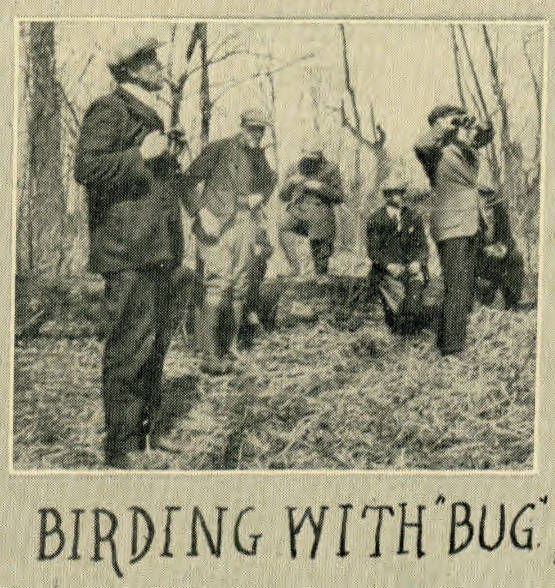
Brief biography of Professor Elon H. Eaton and history the Eaton Birding Society
Local efforts for the United Church Canvass Program during the 1940s.
Opening of a time capsule created in 1976 by a 5th grade class at Prospect Ave School.
Brief history of Geneva's Classical and Union School (Geneva High School).
Brief history of the Geneva Choral Society Music Festival.
Brief history of the Geneva Music Festival
Overview of the Woman’s Land Army during World War I.
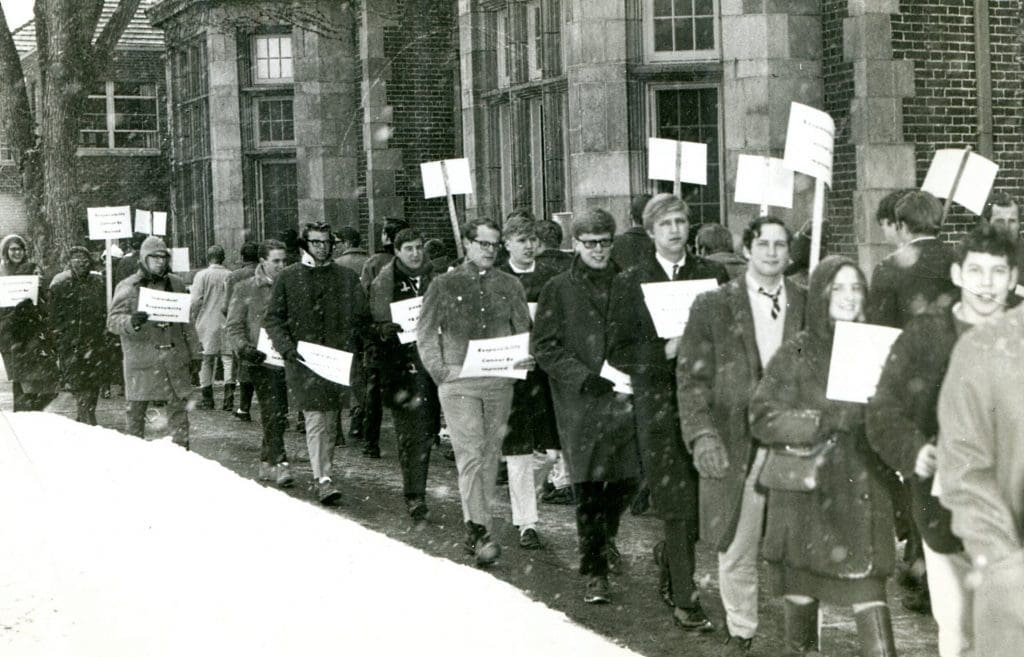
An account of the 1968 election night rally on the campus of Hobart and William Smith Colleges and its aftermath
Part of a series chronicling student unrest on the campus of Hobart and William Smith Colleges in 1968 after the resignation of the colleges' president, Albert Holland
A look back at the Geneva Red Cross Canteen during World War I and II.
Brief history of the Ladies Improvement Society of the First Baptist Church.
The first in a series about the Main Street Improvement Association.
A brief history of the Independent Battery (1879-1923), sponsored by the Grand Army Republic Swift Post No. 94 in Geneva.
A recounting of the Firemen’s Cafeteria which operated during the winter of 1932-33 in Geneva.
Brief history of the Geneva Women’s Free Rest Room Association.
A short history of the Bay View Reading Circle in Geneva.
The community response to Geneva’s attempts to address racial imbalance in its schools.
A look back at Geneva’s attempts to address racial imbalance in its schools.
The formation and activities of the Geneva Peace Council during the 1930s. 
Overview of our relationship with Hobart and William Smith Colleges.
The city's first budget from 1898.
A continuation of the Finger Lakes Times Looking Back article about the March 1972 Geneva High School (Geneva, New York) student walkout. 
To mark the 125th anniversary of the city charter, an overview of how Geneva has changed as a municipality
Brief history of slot machines in Geneva.
Overview of the social rules followed by Hobart College freshmen during the 20th century
Brief history of Spanish Association of the Finger Lakes in Geneva, New York.
A comparison of the admission process at Hobart College in 1839-1839 and 1911-1912
Overview of lifelong learning opportunities from around the community.
A brief overview of vocational education.
Brief timeline of voting history in New York State
Chronicle of the Salvation Army’s presence in Geneva.
The Historical Society addresses the protests occurring across the country.
A review of the period of school expansion and reform in Geneva during the late 1800s.
Mount Olive Missionary Baptist Church celebrates 70 years of making a difference in Geneva.
From student loans to summer camps to a local grant program, the Geneva Rotary Club has spent the past century serving the community.
Discussion on the impact of Title IX on young women and sports .
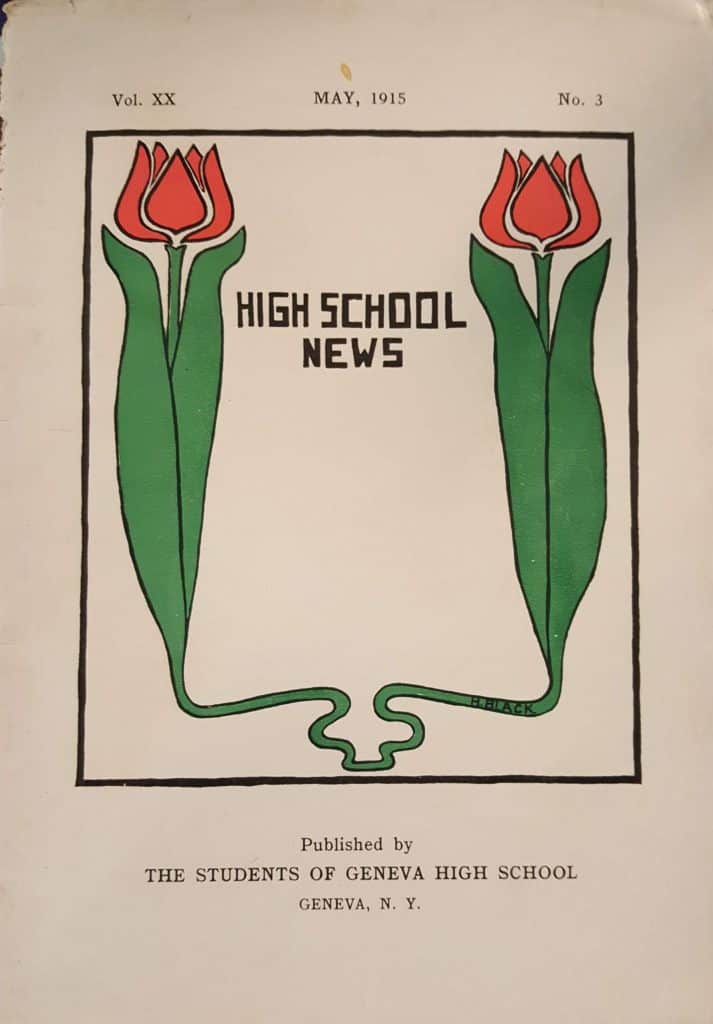
Overview of publications from Geneva High School
Part one is a series about the World War I diary of Alice Seward
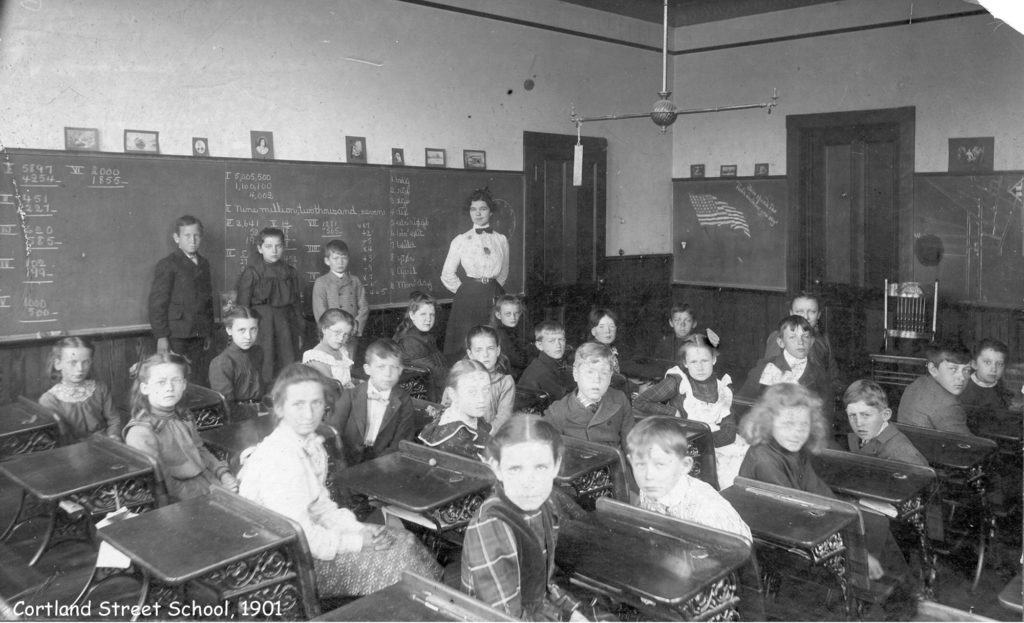
Overview of school buildings using photos and floor plans from "Report of [New York] State Superintendent of Public Instruction" (1897) including Cortland Street and Lewis Street Schools in Geneva, New York.
The creation of the Geneva War Chest during WW I
How the 18th-century frontier raids by Native American warriors and British loyalists led to General Sullivan's campaign to destroy the Iroquois.
1968, the year the Geneva Historical Society opened Rose Hill Mansion as a museum, was a year of momentous change.
The Curator's latest find "Register of Geneva's Gallant Sons War of 1917-1919."
Many Americans are familiar with the segregated schools of the Jim Crow South, however, officially segregated schools existed in most 19th-century communities in the North, including Geneva. It took the concerted efforts of Geneva's African-American community to advocate for improved education and eventual integrated schools for their children.
Geneva Middle School students create a mural recounting Geneva High School boycotts of the 1970s.
Evolution of women’s rights in the United States
Brief summary of the 1907 New York Woman Suffrage Association Annual Convention held in Geneva, New York.
Free public schools appeared in Geneva in the mid-19th century.
The Geneva City School District can trace its birth to 1839, the year that the village’s Districts No. 1 and No. 19 merged to form the state’s first union school district. By the 1830s, the community had a College, dozens of private schools, and two public schools for the basic instruction of children of all classes. Yet schooling in the antebellum period here and throughout New York was far from satisfactory. The unification of Geneva’s districts was part of a statewide movement in the mid-19th century to improve public schooling.
While looking for information on Rose Hill (called the Boody Farm when Edgar Boody owned it) I found this account. I had heard a little about Klan activity in the 1920s, but had never pursued the subject. Now I wondered about the history of the Klan in Geneva and I started poking around in the local newspapers.
A quick view of Hobart & William Smith Colleges during the tumultuous 1960s.
In 1960 I was 8 years old. Back then everyone attended the neighborhood elementary school, either public or parochial.
If you did not go to the pre-screening of the movie The Suffragette at the Smith, you missed an incredible experience. Though the movie was about the British suffrage movement, there is a Geneva connection.
Very early on May 5, 1970, Ontario County Sheriffs arrested five Hobart students in a drug raid. The raid turned up hash pipes, pills and marijuana. One of the sheriffs was recognized by the students as “Tommy the Traveler” – a man who had been active on campus encouraging anti-war and anti-ROTC protests, and claiming to be a member of Students for a Democratic Society.
I’ve posted photos to the historical society’s Facebook page for two and a half years. Digging further into the collection to come up with fresh material, I found this photo of Castle Street
The recent debates over Geneva’s school budget and national arguments about the Common Core curriculum have had me thinking and reading a lot about the history of education this past spring. Education and schooling have been part of life in Geneva from its early settlement, though not in a form most modern Genevans would recognize.
For over forty years women’s rights and dress reform advocate Elizabeth Smith Miller (1822-1911) called Geneva home. In 1897 Miller got the New York State Suffrage Association to host their annual convention in Geneva. After the convention Miller and her daughter, Anne, formed the Geneva Political Equality Club. The purpose of the club was to secure full suffrage for women.
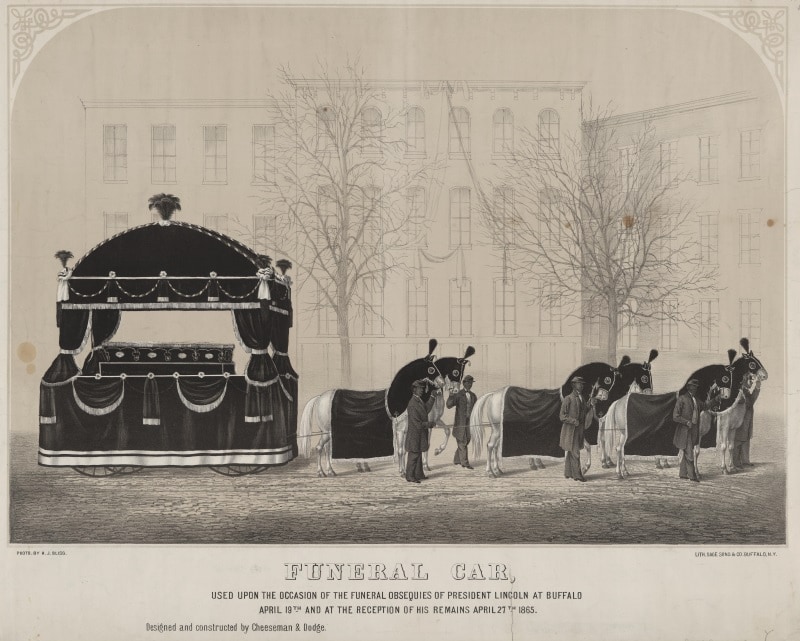
One hundred fifty years ago this week actor John Wilkes Booth changed American history when he stepped into the Lincolns' booth at Ford's Theater and shot the president in the back of the head, the first man to assassinate a U.S. president. The assassination was an awful event that shook the nation just a week after Lee’s surrender overjoyed the North.
The Geneva USO Club helped the community do its part during World War II.
In November 1943, the Geneva Daily Times reported Cole, Circus Owner, Inducted Into Army
A discussion on the importance of the War of 1812.
Brief overview of community organizations in Geneva during the 1920s.
History of dumps in Geneva.
Chronicling the problem of loose animals like livestock in Geneva, New York during the 1800s through newspapers and government records.
The 126th New York Infantry Regiment at the Battle of Gettysburg
Fire related issues as chronicled in the Village of Geneva board minutes during the early 1850s.
Robert Swan's reaction to the draft during the Civil War
A little over one-hundred fifty years ago, on September 22, 1862, President Lincoln took a step he had planned for months and proclaimed that as of January 1, 1863 “all persons held as slaves within any State or designated part of a State, the people whereof shall then be in rebellion against the United States, shall be then, thenceforward, and forever free.…”